Skipping meals isn't always a choice. For a lot of people, it's just what happens when the day takes over — one missed lunch becomes two, and suddenly it's 6 PM and you haven't eaten since breakfast. If that sounds familiar, a meal reminder app is one of the simplest fixes there is.
Here are the 10 types of people who benefit most from meal reminders — see if you recognize yourself.
Who actually needs meal reminders?
- People trying to gain weight. This is the most common reason people download a meal reminder app. Gaining healthy weight means eating enough, consistently — and that's hard when you never feel hungry during the day. Timed reminders turn "I should eat more" into an actual routine.
- Busy professionals. Back-to-back meetings, deadlines, "just one more email" — lunch disappears. A reminder at 1 PM is the nudge that gets you away from the desk.
- People with ADHD. Time blindness and hyperfocus make forgetting meals extremely common with ADHD. Health experts specifically recommend setting alarms to eat as a core coping strategy.
- Students. Irregular class schedules, late-night studying, tight budgets — student life wrecks eating routines. Reminders keep at least the basics on track.
- Shift workers. Night shifts flip your whole day around. When "lunch" happens at 3 AM, your body's hunger signals can't be trusted — a schedule can.
- People managing diabetes. Regular meal timing helps keep blood sugar stable. Gaps longer than 4–5 hours between meals can cause dips, fatigue, and poor focus.
- Fitness enthusiasts and bodybuilders. Timed protein intake and consistent meals matter when you're training seriously. Reminders keep the nutrition plan on schedule.
- Older adults living alone. Without the routine of cooking for a family, meals get skipped. A gentle daily reminder helps maintain a steady eating pattern.
- New parents. Newborns destroy schedules. When you're running on two hours of sleep, remembering your own lunch needs an external trigger.
- People recovering from illness. After surgery or during recovery, regular nutrition speeds healing — but appetite is often low and days blur together. Reminders keep intake consistent.
What makes a good meal reminder app?
Not all reminder apps are equal. The ones people actually stick with share a few traits: precise, reliable alarms (a reminder that doesn't ring is useless), easy meal logging so you can see what you actually ate, a weekly overview to spot patterns, and — importantly — no account, no subscription, no friction. It should work the moment you install it, even offline.
Meal Reminder & Alarm: built for exactly this
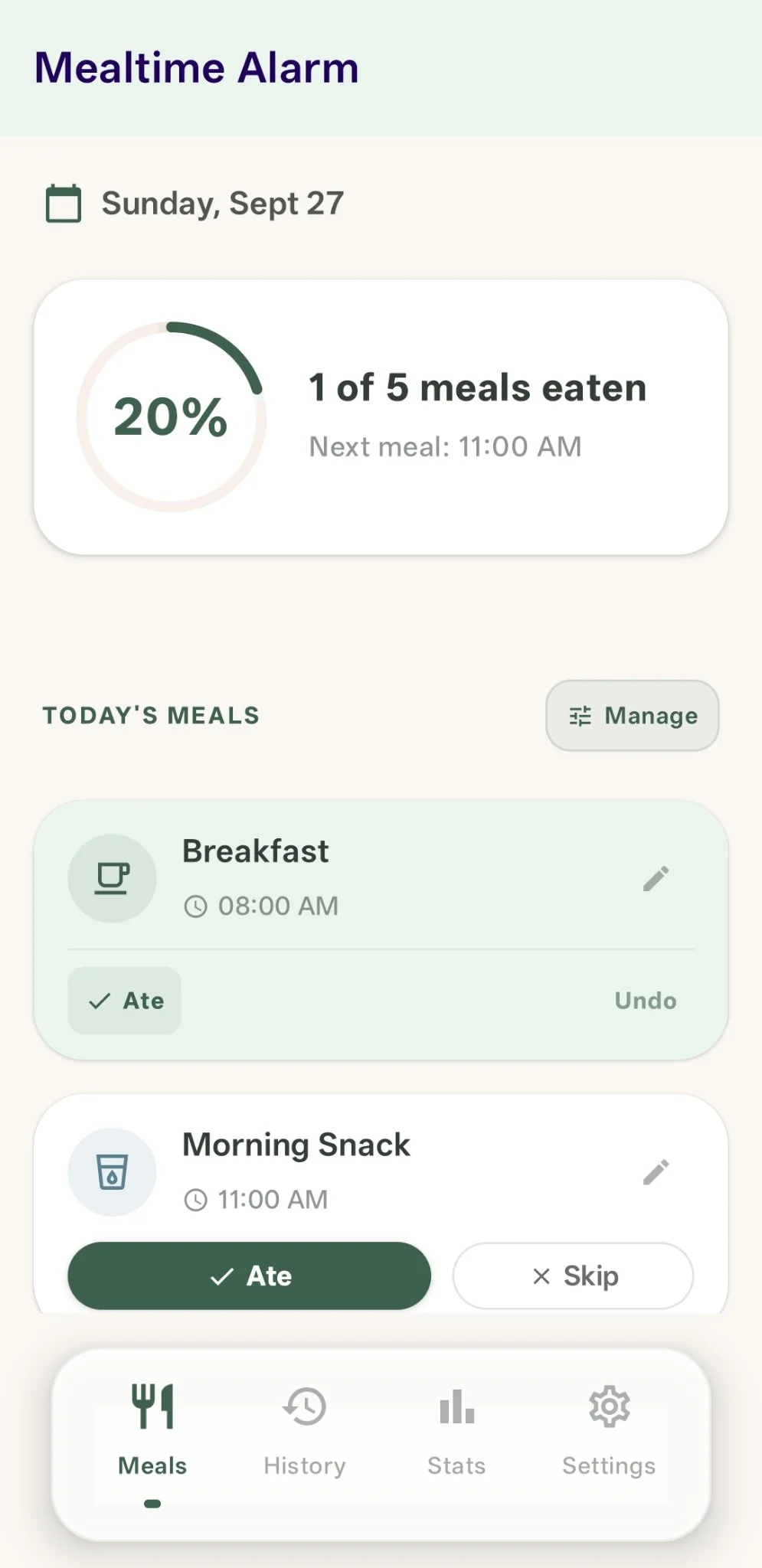
That's why we built Meal Reminder & Alarm. Set your meal times once, get reminded every day, log your meals, and check your weekly routine at a glance. It's 100% offline, needs no account, and it's free.
If you recognized yourself anywhere in the list above, give it a try — it takes about a minute to set up.